
India is in the midst of one of its most ambitious infrastructure expansion cycles. Infrastructure expansion is anchored by large-scale national programmes such as the National Infrastructure Pipeline (NIP), which alone envisages investments of around $1.4–1.5 trillion across sectors including energy, transport, and urban infrastructure over FY2019–25.
The scale of physical assets is equally significant, with growth mirrored in airports, ports, data centres, and defence installations. Some highlights are India’s installed power capacity crossing 524 GW as of February 2026, making it one of the largest power systems globally. The network of airports has more than doubled in the last decade. Our maritime infrastructure includes 12 major ports and over 200 minor and intermediate ports.
However, infrastructure expansion has not always been matched by proportional investment in strengthening their resilience and protection. This has created widespread systemic vulnerabilities.
Infrastructure assets, ever-increasing risks, and the power of advanced materials
From airports to energy grids and digital networks, infrastructure today has stepped up from being merely an economic enabler to also being considered a strategic asset. As the scale, complexity, and interconnectedness of these systems grow, so does the degree of maintenance and vulnerability.
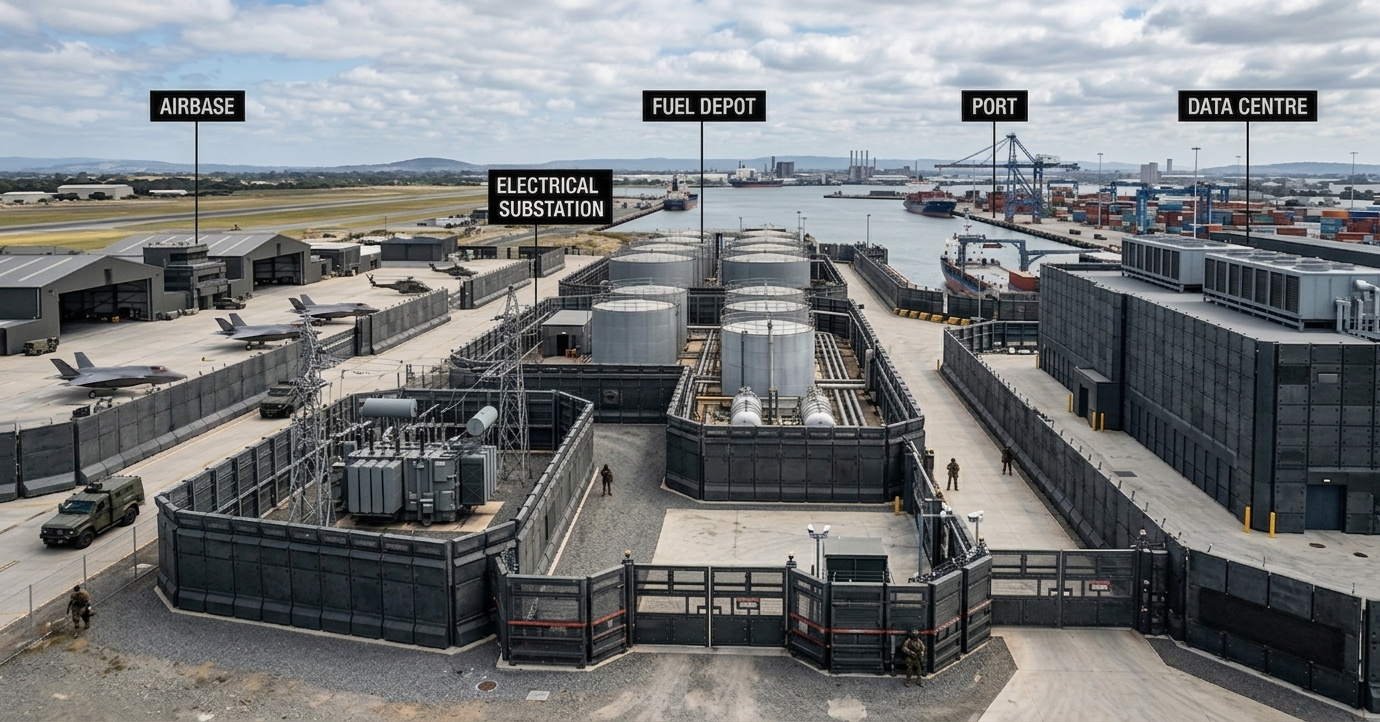
Assets such as airbases, substations, fuel depots, ports, and data centres are constantly under stress. This is not just because of the possibility of sudden geopolitical upheavals, but also breakdown due to operational wear and exposure to continual environmental stressors such as heat, moisture, corrosion, etc. Over time, this combination can quietly erode reliability, turning even routine failures into high-impact events.
To illustrate, recent global conflicts have shown that low-cost drones can bypass traditional perimeter security and target runways, fuel storage, and aircraft hangars on ground. Traditional infrastructure was never designed to withstand such precision aerial threats, creating a critical gap that armour solutions must address.
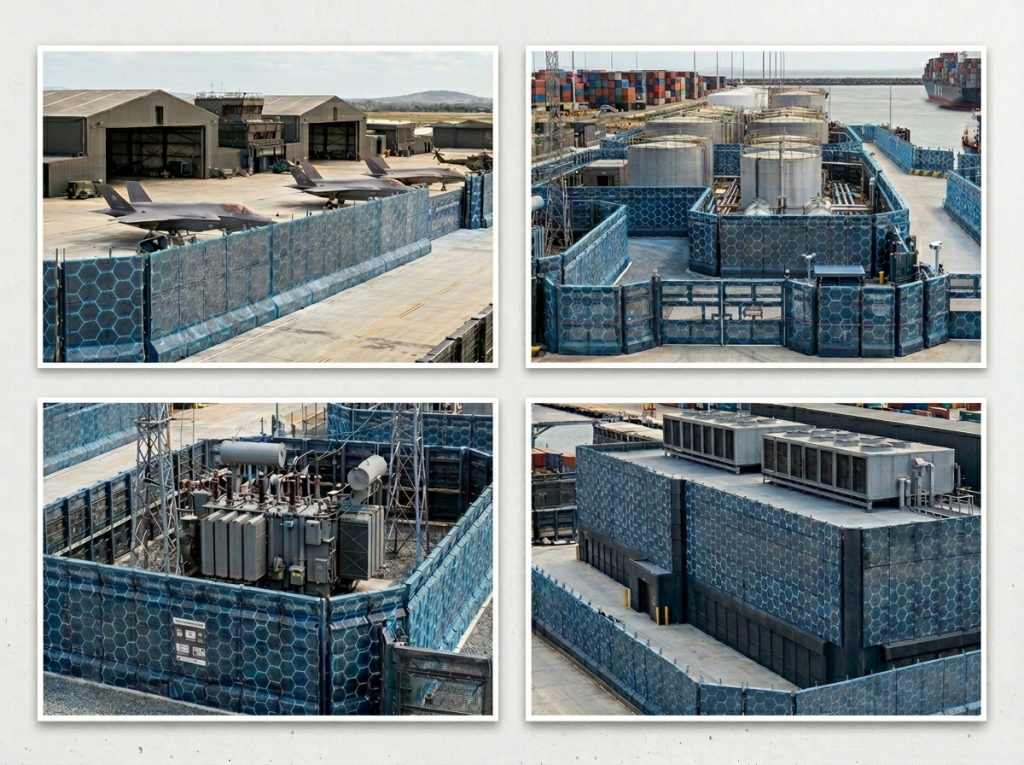
Advanced ceramics have the capacity to change this equation. They bring a level of strength, stability, and resilience that traditional materials struggle to match, whether it is reinforcing critical structures, shielding sensitive systems, or withstanding the impact from a range of ballistics and blasts. Apart from exceptional performance, it’s also the flexibility that is intrinsic to these materials. They can easily be customised and integrated as in-built and add-on armour across diverse types of infrastructure, making them a practical way to fortify these large-scale installations.
Built to last: Engineered ceramics for maximum security and resilience
Today, the role of technical ceramics is not limited to shielding the nation’s infrastructure from high-impact events. It is equally about extending the operational life of these high-value assets under constant stress and preserving their integrity over time. In doing so, they bridge a critical gap between protection and longevity, enabling infrastructure that is not just harder to damage, but also extends operational life without compromising on performance.
| Across sectors, the value of advanced ceramics is recognised in their: |
|---|
| – High hardness which enables efficient shielding from projectiles and fragments |
| – Low density that ensures advanced protection without structural overload |
| – Thermal stability which guarantees performance in fire/blast scenarios |
| – Corrosion resistance, promising performance and durability in harsh environments |
| – Electrical insulation, critical for energy systems |
These properties make them ideal for blast-resistant panels and structures, high corrosion, wear, and thermal resistance coatings, protective cladding for critical installations, armoured enclosures and shelters for sensitive equipment, and reinforcement of high-risk infrastructure nodes.
In defence applications, CUMI’s comprehensive library of materials in industrial ceramics have already proven their effectiveness in personal and vehicle armour. The extension of our expertise into infrastructure protection is a natural progression, especially as threats become more sophisticated and multi-dimensional.
| Infrastructure armour includes stationary armour installations or fixed protective systems such as soldier-operated ballistic shields, fortified sentry posts, observation posts, perimeter barriers and modular ballistic walls, provide critical ballistic protection to military and paramilitary personnel operating in highly exposed environments. >> Read more about how CUMI’s library of advanced materials can be used to design modern stationary protection systems. |
Infrastructure targets and where advanced ceramics fit in
Recent global conflicts have shown that low-cost drones can bypass traditional perimeter security and target runways, fuel storage, and aircraft hangars on ground. Traditional infrastructure was never designed to withstand such precision aerial threats, creating a critical gap that armour solutions must address.
Airbases and
aviation infrastructure
– Critical elements at airbases include hardened aircraft shelters (HAS), runways (especially rapid repair zones), and fuel storage & ordnance areas. Some of the threat profiles they are exposed to are fragmentation from missiles and munitions, blast overpressure, and thermal exposure from fuel fires. Environmental stressors include continuous UV exposure, temperature cycling, and surface wear.
Being extremely lightweight, with high compressive strength, superior hardness, and the ability to shatter incoming projectiles while dissipating residual impact energy, ceramic-based armour solutions are effective at arresting fragments and blast attenuation. In aviation infrastructure, they can be used to design ceramic composite panels with alumina or silicon carbide in aircraft shelter walls, modular ceramic-faced armour tiles for retrofitting aircraft hangars, high temperature-resistant ceramic coatings for fuel and storage areas, and wear-resistant surfaces for high-use areas. By retaining structural integrity under repeated thermal cycling and environmental exposure, advanced ceramics ensure long-term endurance.
Power infrastructure
– Across power infrastructure such as substations & grid nodes, particularly vulnerable components are transformers, switchgear assemblies, and control rooms. They can suffer from shrapnel damage, small projectile impact, including drones, fire and arc flashes, as well as from moisture ingress, corrosion, and insulation breakdown over time.
Since advanced ceramics are electrically insulating, fire- & corrosion-resistant, and maintain their integrity under high thermal and mechanical stress, they perform well as ceramic ballistic enclosures around transformers, arc-resistant ceramic insulation systems, and blast-resistant ceramic cladding for control buildings.
Fuel and
energy storage systems
– Fuel and energy storage systems such as refineries and tank farms have large storage tanks, pipelines and valve systems, and control units. They are susceptible to threats such as projectile impact leading to rupture, secondary fires/explosions, and massive heat propagation alongside chemical exposure, corrosion, and thermal fatigue.
By providing a combination of impact resistance and thermal shielding, crucial in fire-prone environments, ceramics are ideal to fabricate ceramic-lined containment systems for critical piping, impact-resistant ceramic composite barriers around tanks, TBCs to delay heat-induced failure, and wear-resistant coatings to prevent corrosion. By displaying chemical inertness with thermal stability, ceramic-lined pipes and containment systems, thermal barrier coatings (TBCs) and protective barriers around storage units reduce chances of catastrophic failure and gradual material degradation.
Ports and logistics infrastructure
– Ports and logistics infrastructure such as cargo terminals, fuel depots, and command & control centres are increasingly prone to damage via drone strikes, explosive fragmentation, and localised structural damage. This is in addition to saltwater corrosion, humidity, and heavy mechanical wear.
Ports need retrofittable, corrosion-resistant, low-maintenance solutions and ceramics deliver all three. Lightweight ceramic armour panels can be retrofitted on to port control buildings, modular ceramic barriers can ably safeguard critical storage zones, and wear-resistant ceramic surfaces benefit high-load handling areas.
Communication and
data infrastructure
– Communication & data infrastructure such as data centres, network switching facilities, and satellite ground stations have lately become easy targets for precision strikes, localised blast damage, while being at high risk from fire and heat exposure.
Advanced ceramics with their high fire and heat resistance, structural stability, and electromagnetic neutrality are critical to fortify sensitive electronic components and environments from long-term thermal and environmental stress. Some potential use cases include ceramic composite shielding panels for server enclosures and walls, fireproof ceramic insulation layers in critical rooms, and EMI-resilient ceramic housings in select applications. This helps protect critical digital assets from sudden events and gradual performance drift.
| >> Read here about how we are benchmarking protection for our soldiers on the frontline. |
The future: Advanced materials and intelligent armour
The future of infrastructure armour lies at the intersection of materials science, engineering, and digital intelligence. Key trends shaping the next phase will include hybrid material systems combining ceramics, composites, and metals for optimised performance, modular protection systems that can be rapidly deployed or upgraded, and integration with AI-driven threat detection systems for proactive defence.
As India continues to scale its infrastructure, the emphasis will be on securing critical assets as much as it is on building them. Infrastructure armour, powered by advanced ceramics and next-generation materials, will be central to this transition.
India’s infrastructure story has to be about expansion as well as resilience. In an era where threats are unpredictable, asymmetric, and increasingly targeted at critical systems, protecting infrastructure is synonymous with protecting national sovereignty. This makes infrastructure armour not just a layer of defence but an investment in continuity, security, and strategic advantage.
